
Program Notes – Essay No. 1 for Orchestra
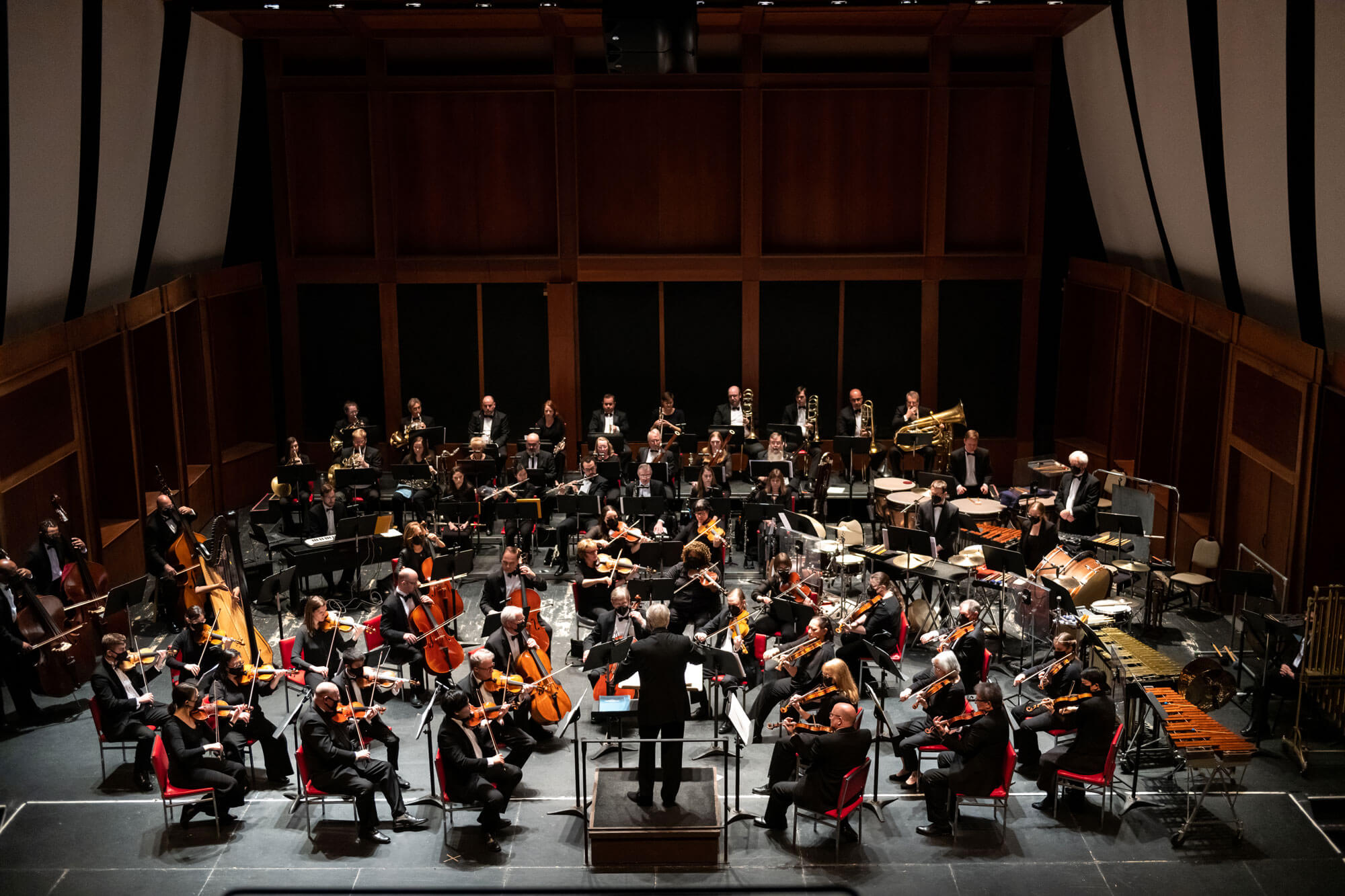
Essay No. 1 for Orchestra
Samuel Barber (1910–1981)
Written: 1937
Movements: One
Style: Contemporary American
Duration: Eight minutes
Americans in the late 1930s who enjoyed listening to classical music always looked forward to the live radio broadcasts of the NBC Symphony Orchestra conducted by the fiery Italian maestro Arturo Toscanini. He was known for his spirited interpretations of the standard literature, but he wasn’t a big proponent of modern music―and especially not of American music. Therefore, the broadcast on November 5, 1938, was going to be extra-special; Toscanini had finally found a living American composer he could champion. That composer was Samuel Barber; the piece was his Essay for Orchestra.
Samuel Barber met Toscanini while he was in Italy visiting the family of his friend and fellow composer Gian-Carlo Mennoti. With an amazing amount of guts, the two men just showed up unannounced―and uninvited―at the maestro’s luxurious and secluded island home, hoping to meet Mrs. Toscanini. She wasn’t home, but the maestro was. He graciously showed them around the place and spent nearly the entire afternoon with them. Subsequent meetings between Toscanini and Barber led to the unprecedented invitation to perform a work by Barber.
It took more than three years, but Barber eventually sent Toscanini two pieces for his consideration; his Essay, and an arrangement for string orchestra of the slow movement from his String Quartet in B minor. Toscanini sent both of them back to Barber, without comment. Back in Italy, Gian-Carlo went to see Toscanini. He went alone, explaining that Barber was sick. “I don’t believe that,” replied Toscanini. “He’s mad at me. Tell him not to be mad. I’m not going to play one of his pieces; I’m going to play them both.” The reason that Toscanini sent the music back is that he had already memorized them! American music finally had the approval of a great master. The performance was a triumph for Barber. Along with the Essay, that was the night that Americans first heard his now justifiably famous Adagio for Strings.
The Essay is in two parts. It begins with a beautiful melancholic melody played by the violas. The rest of the orchestra takes up the tune and intensifies and develops it until, finally, the trumpet plays the climax. The first part ends with a brass fanfare and a hushed statement of the opening melody played by the strings.
The second part is lighter in character. It is really a sped-up development of a rhythmic fragment from the opening melody. Among the rhythmic “busy-ness,” you’ll hear the first melody come back. The brass return at the end with their fanfare. This time they fade away as the melody melts into nothingness.
©2024 John P. Varineau