
Reading Symphony Sends A Valentine To Its Audience On February 14
By Susan L. Peña
When the Reading Symphony Orchestra’s February concert landed on Feb. 14 this season, music director Andrew Constantine decided to go all-out for Valentine’s Day and program some of the most romantic music ever written, by Giacomo Puccini and Pyotr Ilich Tchaikovsky—composers who were both known for their “intense, luscious and tuneful” works, Constantine said.
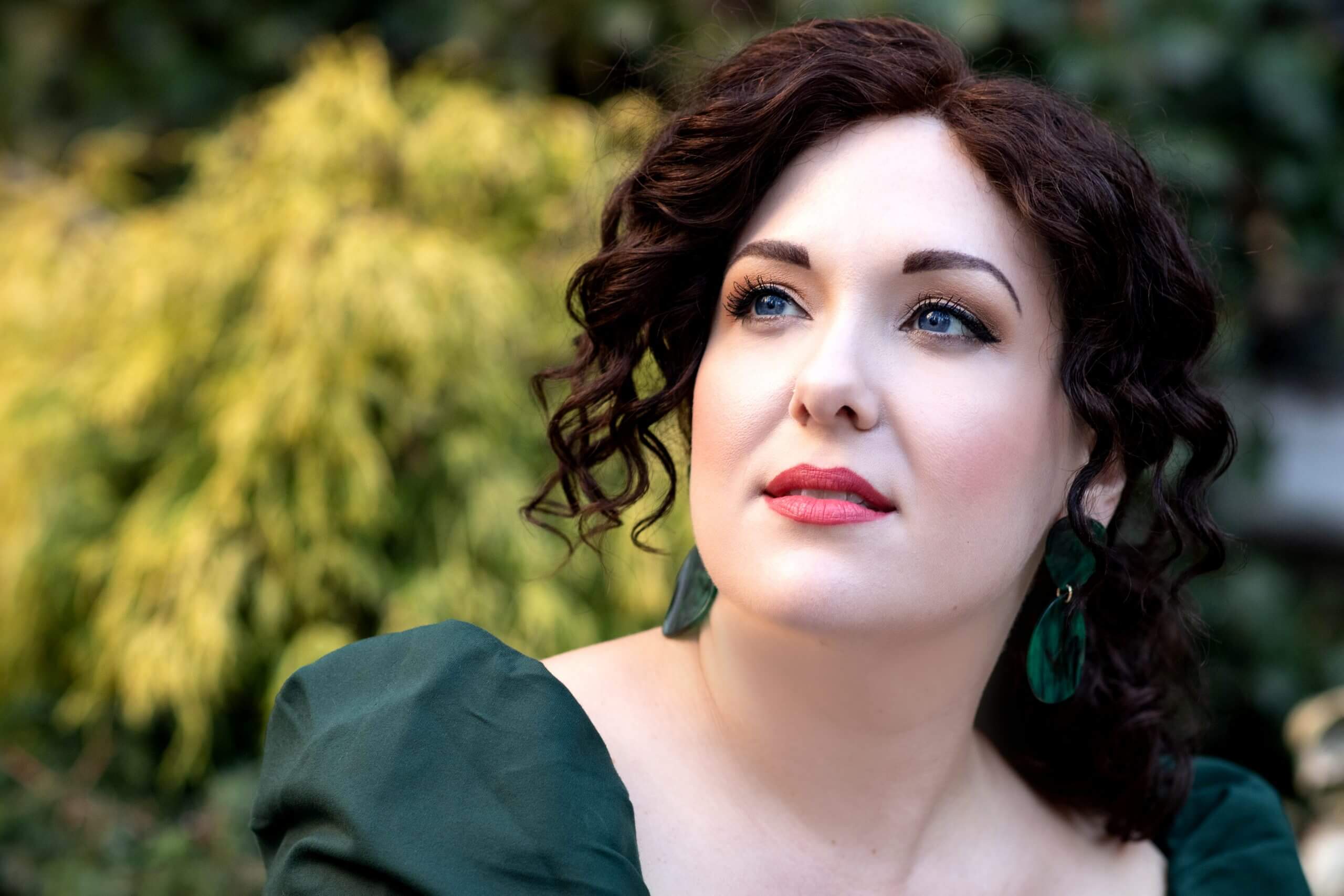
So on Saturday, Feb. 14 at 7:30 p.m., the Santander Performing Arts Center will be filled with romantic orchestral and operatic music. And Berks County’s own operatic soprano, Toni Marie Palmertree, and international opera tenor Charles Reid, will be singing love duets and arias by both composers.
Palmertree, a native of Fleetwood, has gained national notice for her powerful, sweet sound and intense performances in operas across the country, including the Metropolitan Opera, the San Francisco Opera, the Lyric Opera of Chicago, the Florida Grand Opera, and many others. She is currently covering the lead role of Cio-Cio San in Puccini’s “Madama Butterfly” at the Met, and is scheduled to sing that role in the final performance of the run, on March 28.
Palmertree showed an early talent for singing, and was among the first members of Berks Classical Children’s Chorus (now Berks Youth Chorus). After graduating from the Peabody Conservatory with a degree in music, Palmertree returned to Berks County and took a hiatus from singing to raise her baby son, Cole, who is now 18. She was discovered by Francine and Tamara Black, founders of the Berks Opera Company (which has collaborated with the RSO on this and other programs), and she sang in their productions of “Thais,” “Susannah” and “Die Fledermaus.”
Meanwhile, she began participating in some competitions, including the The Metropolitan Opera National Council District Awards, which she won. In 2015, she landed a spot in the Merola Opera Program at the San Francisco Opera Company, and the next year was awarded the prestigious Adler Fellowship, which provides training and opportunities to perform in SFOC productions, in smaller roles and as understudy for lead roles.
Palmertree’s stage debut was the offstage role of “The Voice of Heaven” in “Don Carlo,” and appeared as Liu in “Turandot” while covering that role. Then in 2017, while covering the role of Cio-Cio San, she suddenly had to replace the indisposed Lianna Haroutounian, and brought down the house with her portrayal. Janos Gereben, music critic for the San Francisco Classical Voice, wrote: “The young soprano not only met the challenge, but she claimed her place among the finest vocal interpreters of the role heard here recently.”
Oddly, history repeated itself when, after another hiatus during the Covid pandemic, she snagged a Met debut singing “The Voice of Heaven,” and will once again be onstage for the role of Cio-Cio San opposite tenor Matthew Polenzani, after covering it for one of the two alternating regular leads.
“It feels a little surreal,” Palmertree said of this stunning opportunity. “I’m glad for the time to prepare it, and by that I mean mental preparation. So many friends are flying in to see me.
“It’s a moment for people to see that it’s possible to take the nontraditional path, if you believe in yourself and keep going, no matter what. Butterfly is so dear to my heart; as a mother I understand her choices. The fact that it’s her makes this so special.”
Palmertree will be making her debut in the role of Maddalena in “Andrea Chenier” at Opera Delaware in May, and will be singing lead soprano in Beethoven’s Ninth Symphony with the Seattle Symphony in June.
For the RSO concert, Palmertree will be performing as Mimi in the first-act love duet from Puccini’s “La Boheme with Reid, and will also sing “Quando M’en Vo’” as Musetta, and Reid will sing “O Soave Fanciulla,” also from “Boheme.” She sing “O Mio Babbino Caro” from “Gianni Schicchi,” and he will sing “Nessun dorma” from “Turandot.”
Palmertree will perform “Tatiana’s Letter Song” and Reid will sing “Lensky’s Farewell,” from Tchaikovsky’s rarely performed “Eugene Onegin”; the RSO will play the second-act “Waltz” in between. “I’m excited about singing this,” Palmertree said. “I think the Slavic languages are a good fit for me, and I have wanted the opportunity to do it.”
She noted that noted pianist and vocal coach Ellen Rissinger, who collaborated with her on a virtual concert, “The Heart of a Woman” during Covid, has coached her through the Russian for this aria.
Constantine said that a program like this is difficult to conduct because of the abrupt changes in mood and style, “from very tense, controlled drama to something a little wilder. And accompanying opera singers is an art in itself.”
In order to balance the program and give the singers some respite, he chose Tchaikovsky’s “Waltz” from the ballet “Sleeping Beauty,” and his Fantasy Overture, “Romeo and Juliet.” He also found two short, rarely heard orchestral pieces by Puccini: “Witches’ Sabbath” from “Le Villi” (The Willies), and the Prelude to Act 1 of “Edgar.”
“I absolutely love them,” he said. “They’re quite dramatic.”
Palmertree, who previously starred in a concert production of “Tosca” with the RSO in 2019, said, “This concert was planned long before I was scheduled for the Met, but the timing is perfect,” Palmertree said. “I appreciate my hometown supporting me, because now we can share the joy together.”
“Everybody loves Puccini and Tchaikovsky,” Constantine said. “Both of them have a way of touching every individual in the most intense and personal of ways. They wear their hearts on their sleeves; there’s no holding back.”
For more information about the Reading Symphony Orchestra season, and for ticket information, visit www.readingsymphony.org. It should be noted that supertitles with English translations will be used for the operatic sections.